

By JC Bowman
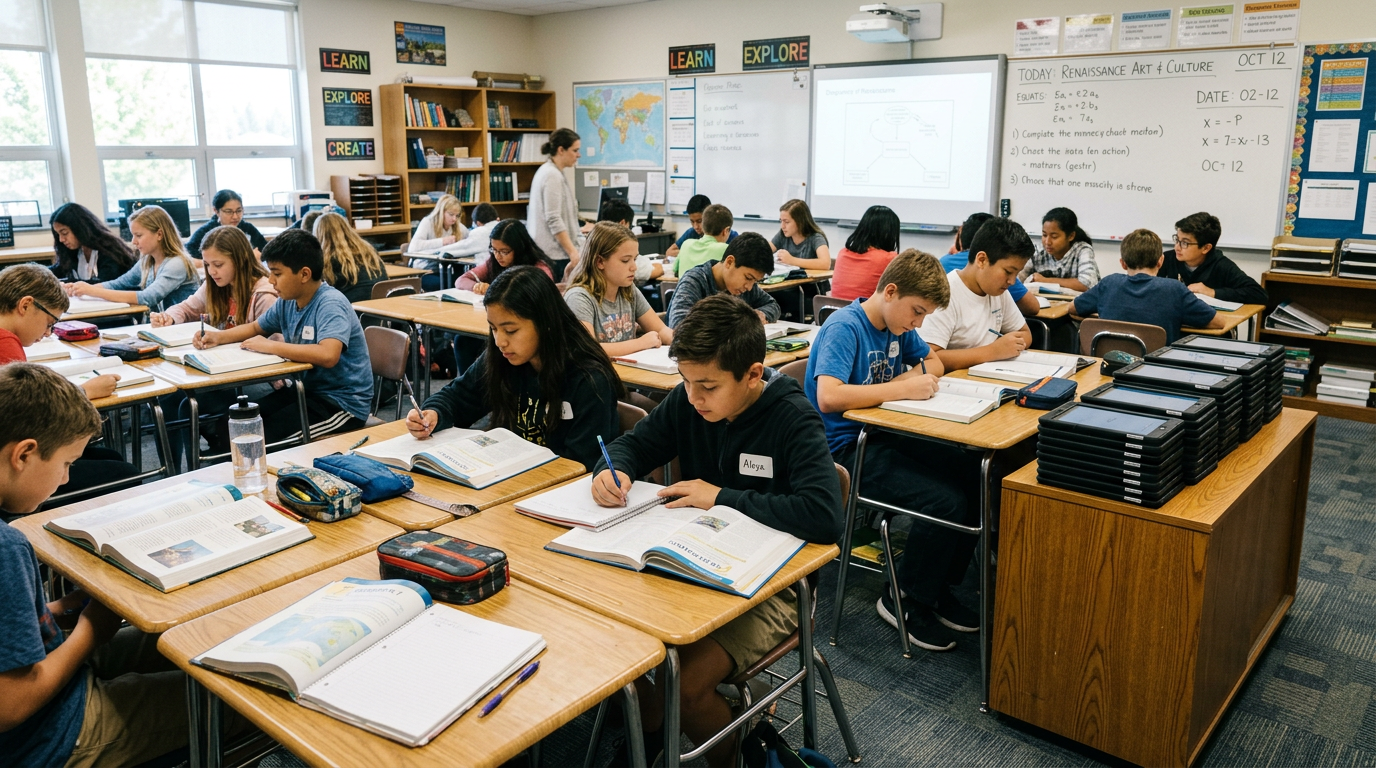
Since the pandemic, Tennessee classrooms have transformed significantly, with Chromebooks replacing traditional textbooks. Technology became essential to continue instruction during school closures. Now that the emergency has passed, we must ask: Are students actually learning better, or are we facing new challenges?
The discussion isn’t about eliminating technology, as it’s already integral to our education system. Every school district in Tennessee uses devices such as laptops or Chromebooks for daily instruction, with many providing each student with one. Schools, including charters, are adopting digital learning while balancing traditional teaching methods.
The financial reality is increasingly difficult to ignore. Technology budgets have grown dramatically in many districts. Devices are lost, broken, stolen, or rendered obsolete within a few years. The cycle of purchasing, repairing, replacing, updating software, and maintaining networks has become a permanent and costly obligation. Nationwide, school technology spending has surpassed $30 billion annually, with billions invested in Chromebooks alone.
Every dollar spent replacing a damaged device is a dollar that cannot be used for classroom resources, teacher salaries, professional development, or other costs. At a time when school districts face mounting financial pressures, legislators and education leaders are beginning to question whether the current balance between technology and traditional instructional materials is sensible. That conversation is already underway in Tennessee.
Many thoughtful legislators are discussing policies that would prioritize textbooks and other traditional instructional materials, particularly for students in grades K-5. Recent legislative efforts have encouraged districts to develop policies that reduce unnecessary screen time while preserving technology for targeted instructional purposes. The goal is not to turn back the clock. Rather, it is to ensure that technology serves as a tool that supports learning, rather than the primary driver of instruction.
The case for restoring greater use of textbooks rests on several important considerations.
First, there is growing evidence that students often learn more effectively with physical materials. Research consistently shows that reading comprehension and information retention are generally stronger when students read printed texts rather than screens. Physical books encourage deeper engagement, make re-reading easier, and reduce the distractions that often accompany digital devices. This is especially true for younger learners who are still developing foundational literacy skills.
Second, reducing excessive screen time benefits students academically, socially, and physically. Many children already spend hours each day on phones, tablets, computers, and gaming systems outside of school. Adding another six or seven hours of screen time during the school day can lead to eye strain, reduced attention spans, and disrupted sleep. More importantly, excessive screen use can diminish face-to-face interactions that help students develop communication skills, emotional intelligence, and healthy relationships.

Third, restoring a greater role for textbooks places teachers back at the center of instruction. No software platform can replace an effective teacher. No algorithm can detect a student’s confusion, offer timely encouragement, adjust a lesson in real time, or build the relationships that inspire confidence and curiosity. The most important factor in student success remains the quality of the teacher standing in front of the classroom.
Too often, education policy treats technology as a substitute for human expertise rather than as a tool that enhances it. The world’s highest-performing education systems recognized this long ago. Countries such as Finland focused first on attracting, developing, and retaining high-quality educators. Technology was integrated thoughtfully but never allowed to overshadow the central role of teachers. Tennessee would be wise to follow a similar path.
Any discussion should emphasize evidence-based instructional practices, including explicit, direct instruction in reading, writing, and mathematics – without stifling creativity. These approaches place teachers at the center of learning by delivering clear, systematic lessons and ensuring mastery before students advance. Technology can support practice, student assessment, and data collection, but it should never supplant professional judgment or instructional expertise.
Tennessee’s TCAP assessments are still transitioning to online testing, requiring school districts to have the necessary technology in place. Should that be revisited? Digital tools can support students with disabilities and enhance specialized learning. Thus, we should adopt a balanced approach, using both textbooks and technology, where they are most effective for student learning.
Tennessee has already made significant progress through its science-of-reading initiatives and investments in high-quality instructional materials. The next step should be to empower districts to restore greater use of textbooks and printed resources in core instruction, especially in the early grades, while establishing reasonable guardrails to prevent excessive device dependency.
State leaders should find ways to help districts manage the costs of expanding traditional instructional materials. Local school boards, educators, and parents should collaborate to determine the best balance for their communities. This discussion centers on priorities: parents, educators, and taxpayers deserve an education system that prioritizes student learning over technology. Technology should enhance teaching, not replace it.
As Tennessee prepares for upcoming legislative discussions, policymakers should focus on what matters most: strong teachers, effective instructional materials, meaningful student engagement, and responsible stewardship of taxpayer dollars. If we keep these priorities at the forefront, our students—and our state—will be better served for generations to come.
#####
JC Bowman is the Executive Director of Professional Educators of Tennessee, a non-partisan teacher association headquartered in Nashville, Tennessee. You may schedule an interview or inquire about more information on any education issue by contacting Professional Educators of Tennessee. Reach us by email at info@proedtn.org or give us a call at 1-800-471-4867.

Legal Notice: Permission to reprint this editorial in whole or in part is hereby granted, provided that the author (or authors) and Professional Educators of Tennessee are properly cited.


You must be logged in to post a comment.