

By JC Bowman
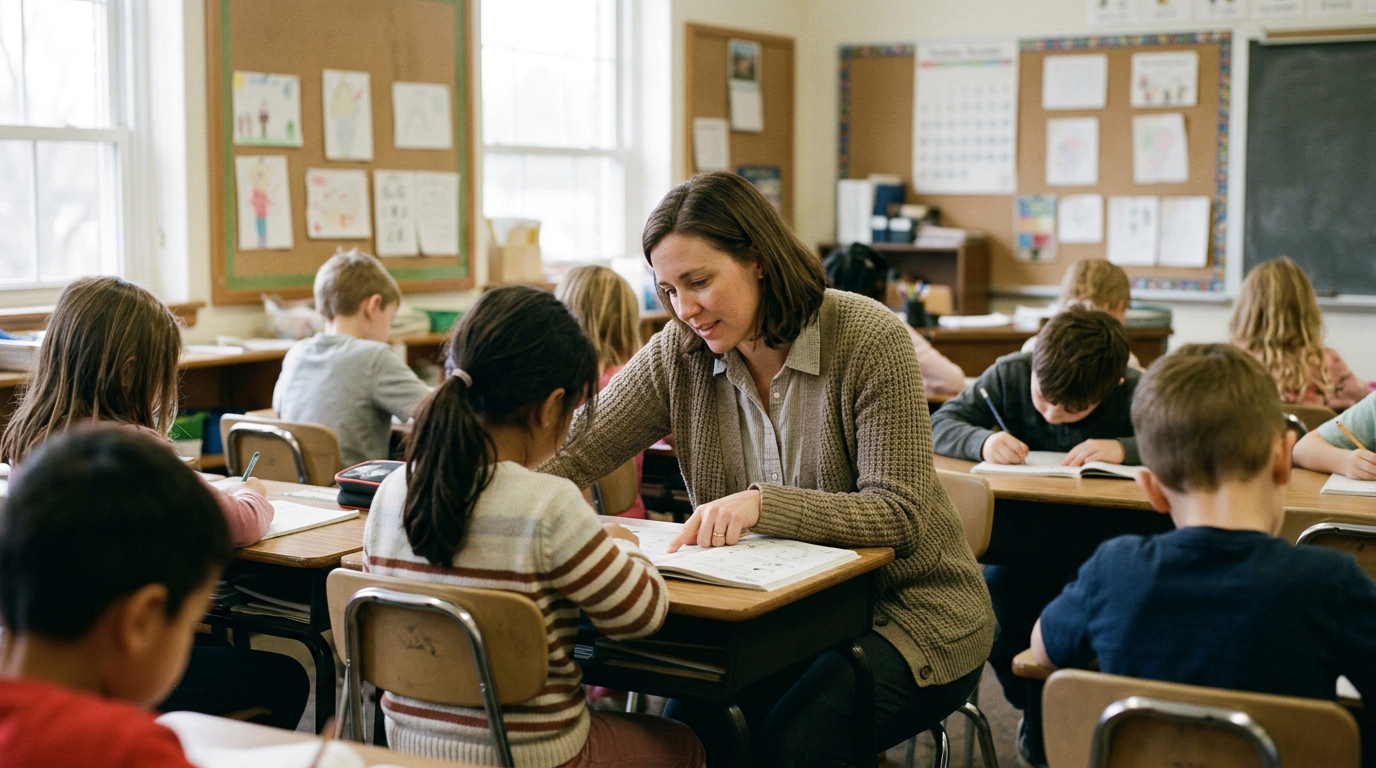
A classroom can look ordinary from the outside. Desks are lined up, backpacks rest on the floor, and a lesson is written on the board. But what children carry into that room is not always visible.
One student may be grieving the loss of a parent. Another may have spent the night in a crowded home after the family lost its housing. A teenager may be working late to help pay the bills. Another child may be worried about whether there will be enough food at home.
Teachers see the effects, even when they do not know the whole story. A student is tired, absent, distracted, withdrawn, or quick to anger. The assignment is still due, and the rest of the class still needs to be taught. The teacher must respond to both realities.
If we want strong schools, we must recognize what children bring with them and give educators the time and support to do their jobs. Compassion and high expectations belong together. Both empirical data and anecdotal accounts make a compelling case.
The numbers help explain the challenge. Judi’s House, a childhood bereavement organization, estimates that about 6.6 million children in the United States—roughly one in 11—will experience the death of a parent or sibling by age 18. The figure comes from the 2026 Childhood Bereavement Estimation Model, which uses recent CDC mortality data. It is a projection of childhood loss, not the number of children who have already experienced it.
Public schools identified about 1.55 million students experiencing homelessness during the 2023–24 school year. Many were staying temporarily with other families, which can make them hard for schools to identify. The actual number is likely higher.
The U.S. Department of Agriculture reported that 14.1 million children lived in households that experienced food insecurity at some point in 2024. That does not mean every child in those households went hungry. It does mean their families face uncertainty about whether they would have enough food.

Those figures represent children in our communities. They also remind us to be careful with assumptions. A child facing hardship isn’t necessarily struggling academically, and a student having difficulty may have a different story than we imagine. The answer begins with knowing the child and listening to the family.
Parents and guardians are a child’s first and most important teachers. Most want their children to succeed and do their best, often under circumstances others cannot see. Schools should treat families as partners, communicate honestly, and help connect them with resources when needed.
Communities play a critical role. Churches, food banks, youth organizations, health providers, businesses, and local volunteers often know their neighbors and can respond in ways a distant bureaucracy cannot. Schools should connect families with those resources without expecting teachers to manage every problem.
A reliable adult at school can make a lasting difference. So can a meal, a conversation with a counselor, transportation assistance, or a plan to help a student return to regular attendance. These practical supports help children show up and be ready to learn.
At the same time, a difficult home life does not eliminate the need for classroom rules. Every child deserves a safe, orderly place to learn, and every teacher deserves the authority and support to maintain it. Understanding why a student is struggling should help adults choose an appropriate response. It does not require ignoring behavior that harms others.
Teachers should not be expected to serve as counselors, social workers, security officers, and housing specialists while also delivering strong instruction. They need access to trained professionals, clear procedures, and administrators who respond when concerns are raised. Policymakers should listen to educators about which supports work and which demands add more paperwork.
We should also protect instructional time. A school cannot address every social problem, and it should not lose sight of its central mission: helping children develop the knowledge, skills, and character needed to build meaningful lives. We cannot be everything to everyone.
That mission becomes harder when a child is hungry, grieving, afraid, or unsure where the family will sleep. Meeting those needs requires families, schools, and communities to work together, each accepting responsibility for its part.
The lesson in the classroom matters. So does the child sitting in the classroom. We must ensure both receive the attention they deserve.
#####
JC Bowman is the Executive Director of Professional Educators of Tennessee

Legal Notice: Permission to reprint this editorial in whole or in part is hereby granted, provided that the author (or authors) and Professional Educators of Tennessee are properly cited.



You must be logged in to post a comment.